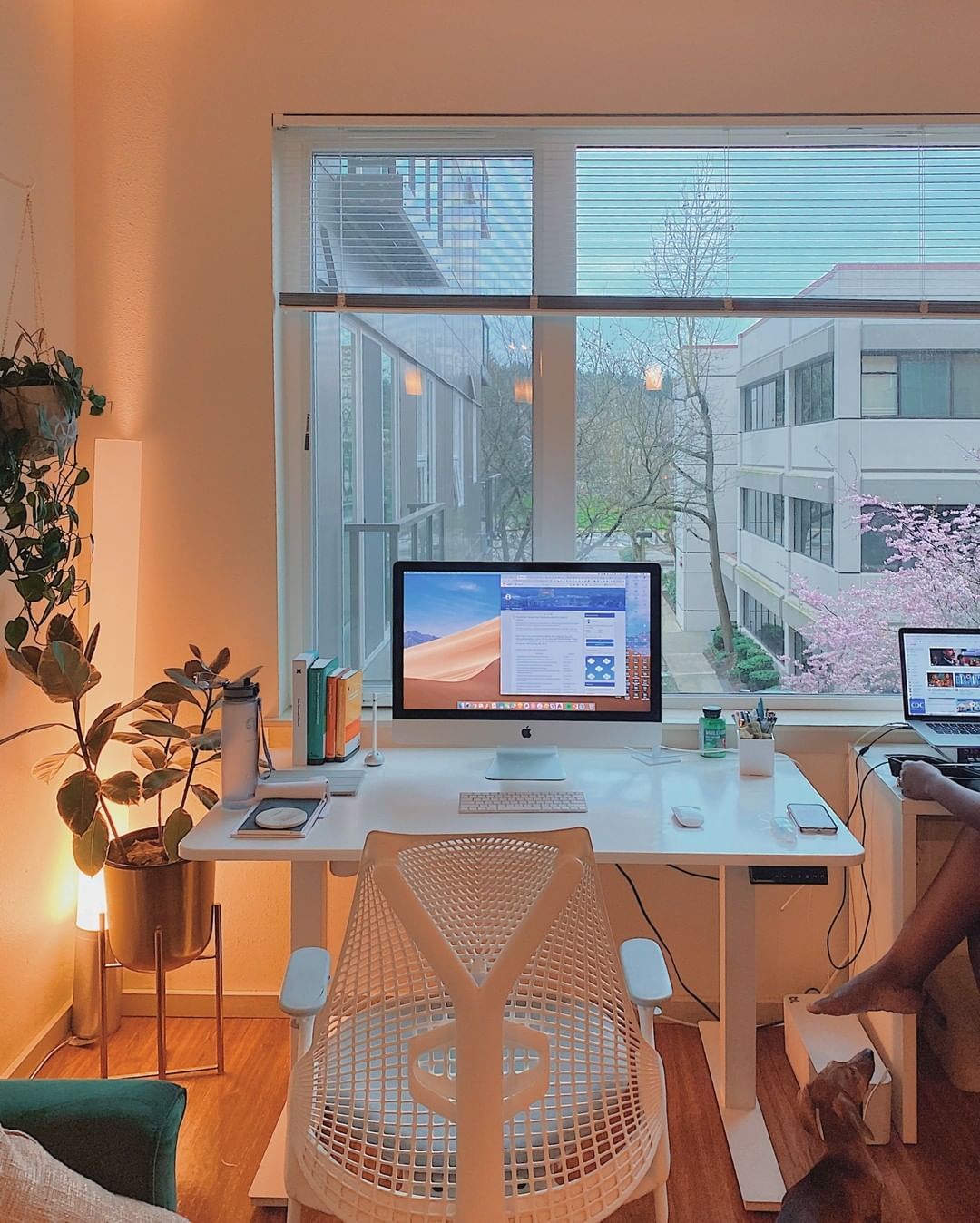
Working from a cramped bedroom corner or a tiny apartment doesn't mean you're doomed to constant distractions. A distraction-free workspace isn't about square footage — it's about intention. Here's how to build one, no matter how small your space is.
1. Pick One Fixed Spot — And Only Use It for Work
Your brain associates spaces with activities. If you work from your bed, your brain links "bed" with both sleep and stress. Choose one small corner, desk, or even a shelf, and use it exclusively for focused work. Over time, sitting there will signal to your brain: it's time to concentrate.
2. Face a Wall, Not a Window or Doorway
It's tempting to set up near a window for natural light, but an open view invites your eyes — and mind — to wander. Positioning your desk to face a wall (with light coming from the side) minimizes visual distractions while still keeping the room well-lit.
3. Declutter Ruthlessly
A cluttered desk is a cluttered mind. Keep only what you need for the task in front of you. Everything else — papers, gadgets, random objects — should have a designated storage spot, even if it's just a small box under the desk.
4. Control Digital Noise as Much as Physical Noise
A tidy desk means nothing if your phone is buzzing every two minutes. Turn on Do Not Disturb, keep your phone in another room or drawer, and close unnecessary browser tabs. Physical and digital clutter both fragment attention.
5. Use Vertical Space in Small Rooms
When floor space is limited, go up. Wall-mounted shelves, a pegboard for supplies, or a hanging organizer can keep your desk surface clear without needing a bigger room.
"A deep life requires focus — the ability to concentrate intensely on a task at hand, while filtering out the surrounding noise."
6. Add One Sensory Anchor
A single consistent element — a specific candle scent, an instrumental playlist, or a particular desk lamp — can act as a cue that tells your brain "focus mode" has started. Consistency trains your mind faster than willpower alone.
7. Set a Visual Boundary
If you don't have a separate room, create a psychological boundary instead. A folding screen, a curtain, or even turning your chair to face away from the rest of the room can create the mental separation a full room would normally provide.
8. Keep a "Landing Pad" for Stray Thoughts
Random ideas and to-dos are one of the biggest workspace disruptors — not because of noise, but because of mental noise. Keep a small notepad on your desk to jot down stray thoughts the instant they appear, so your mind doesn't have to hold onto them.
Thanks for stopping by. If you have a question or a topic you'd like covered, the contact page is always open.